Britain's Most Honest Art Form Is About Six Inches Tall
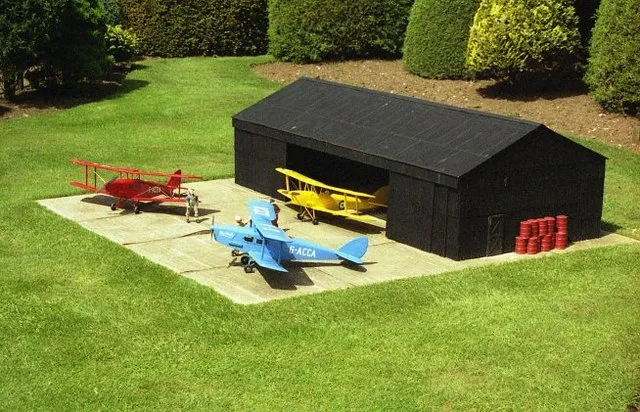
Photo: John Firth, CC BY-SA 2.0, via Wikimedia Commons
The man was repainting a sash window with a brush the width of a matchstick. Behind him stood a row of cottages built from actual Cotswold stone, cut to scale, with mortar. He had been doing this, on and off, for the better part of a decade. Around him, small children ran past at knee height, entirely uninterested in the craft of it, which is fair enough, because they were the size of the buildings.
That is the thing about model villages: everyone under eight thinks they are a playground, and everyone over forty thinks they are a bit sad. Both groups are wrong. These places are some of the strangest, most revealing cultural artefacts Britain produces, and we keep them filed under novelty alongside the waxworks and the penny arcades.
A country that keeps rebuilding itself, smaller
The craze has real roots. Bekonscot, tucked behind a housing estate in Beaconsfield, opened in 1929 — built by an accountant called Roland Callingham in his back garden, extended over decades, and now run by a charitable trust. It is the oldest model village of its kind in the world and it is gloriously, unfashionably odd: a 1930s England that never existed, complete with a railway, a coal mine, a windmill and a cricket pitch where a match is permanently, eternally about to start.
Bourton-on-the-Water's version went up in the 1930s and famously contains a model of itself, which contains a model of itself, which is either a joke or a philosophical position. Torquay's Babbacombe sprawls across four acres and has been quietly expanding since the early 1960s. Wimborne Model Town, built after the war, reproduces a Dorset town at a tenth of the size. Godshill's thatched roofs on the Isle of Wight have been weathering into the island climate for decades, which is what you want: real moss on a fake roof.
The political point is buried in the paving. These are not random collections of buildings. They are arguments about how a place ought to look — tidy, walkable, no traffic, no litter, a high street where the butcher, the baker and the pub all still trade. Interwar Britain invented the model village at the precise moment it was motorising and suburbanising its real ones. Read that as nostalgia, or read it as a quiet complaint. Either way it is a document.
The obsessive wing
Then there is Pendon, out in a field in Oxfordshire, which is a different order of thing altogether.
Pendon is a museum of a railway that never was, depicting the Vale of White Horse in the 1930s at a scale of four millimetres to the foot. It was begun by Roye England, who came over from Australia in the 1920s, fell for the vernacular buildings of the English countryside and decided, with the magnificent impracticality of the true obsessive, to record them in miniature. Every cottage is modelled on a real, specific building that he measured himself. Every hedge is built from individual sprigs. Volunteers have given decades to a single field boundary.
It is not really a railway layout. It is a piece of scholarship with trains on it. And the discipline of it is astonishing: the argument at Pendon has never been about making something charming, but about making something accurate — showing a working landscape as it actually functioned, with the labour and the mud left in.
What a tiny high street tells you
The reason these places matter is that they are made by hand, usually by a small number of people, usually without much money, and always on the understanding that the work will never finish.
Weather is the enemy. Miniature mortar cracks. Moss gets into miniature paving and has to be teased out with a cocktail stick. Paint fades at a rate that is, somehow, faster than on full-size buildings, because the surface area is tiny and the sun is not. A model village is a maintenance obligation dressed as an attraction. The people who keep them going are gardeners, joiners, painters, self-taught engineers and retired men who have turned a shed into a workshop that could build a real boat.
That is folk art, in the proper sense: not naive, not accidental, but skilled work made outside the gallery system by people who will never be paid much for it and whose names will not appear on a wall label.
The case for an afternoon
So here is the argument. A model village costs less than a cinema ticket and gives you ninety minutes of unhurried, mildly surreal pleasure. There is rarely a queue. It works in the rain, which is more than can be said for most British days out. It gives you something to look at properly, which is rarer than it sounds — the pleasure of noticing that the drainpipes are lead, that someone has modelled a dropped crisp packet from thirty years ago and never removed it, that a tiny pub has tiny windows with tiny curtains behind them.
And it is quietly honest in a way that grander attractions are not. Nothing here is pretending to be immersive. Nothing is trying to sell you an experience. It is just a version of Britain, one-tenth the size, made by people who thought it was worth the bother of getting the roof tiles right.
Take a child, take a parent, take a flask. Go in November when it is empty and the paint looks slightly darker in the wet. Stand in front of a miniature terrace and notice that you are looking at an entire argument about what this country is supposed to look like — and that somebody made it, by hand, in a shed, for you to wander around on a Sunday.