Behind the Counter: The Quiet Brilliance of Britain’s Corner Shops
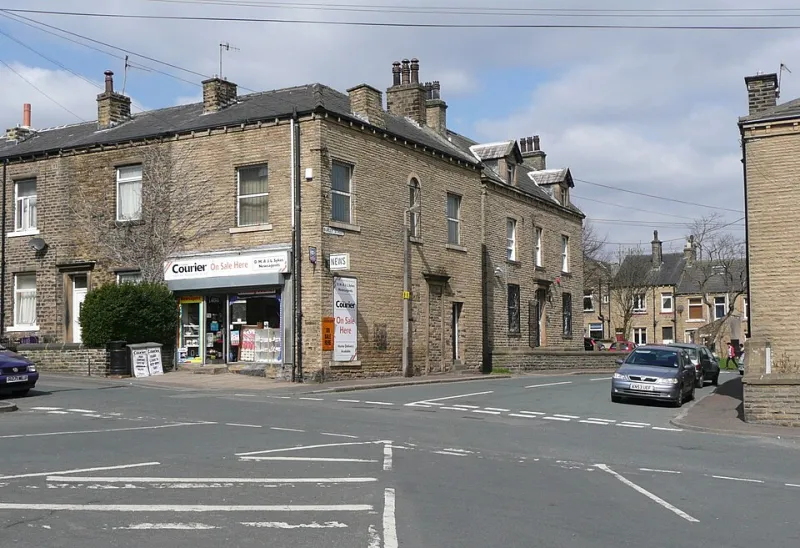
Photo: Humphrey Bolton , CC BY-SA 2.0, via Wikimedia Commons
There is a particular sound a corner shop makes on a wet Tuesday: the door chime, the fridge’s low hum, the rustle of a carrier bag being folded for the third time because the owner knows you’ll forget it otherwise. It is not a romantic sound. It is ordinary. That is exactly why it matters.
We are encouraged to think of corner shops as convenience: a place to grab milk, a pint of something, a scratchcard. Convenience is the least interesting thing about them. A good corner shop is a living archive: of who moved to the street and when, what people cook, which bus is running late, who is unwell, which child has just passed their driving test. It is local history written in stock rotation and noticeboard pins.
The shop that remembers the street
Supermarkets remember what you buy. Corner shops remember you. Not always in a sentimental way. Sometimes they remember that you owe 40p, or that you once asked for a strange brand of Turkish coffee and they started stocking it. That memory is a form of social infrastructure. It is also, quietly, a form of power: the shopkeeper sees the street’s small dramas before the council, the police or the local paper do.
This is not nostalgia for a Britain that never existed. Many corner shops are tough, under-margined businesses operating on long hours and thin profits. Some are shabby. Some are owned by chains. The point is not that every shop is perfect. The point is that the model — small, local, mixed-use, human — does something that a supermarket self-checkout cannot.
Three counters, three histories
I’m thinking of three shops, each from a different region, each doing the same job in a different accent. They are composites of places I have known, but the details are true to type.
Bradford: the spice rack as a map
In a family-run shop in Bradford, the back shelf is a geography lesson. There are lentils, atta flour, tinned tomatoes, dried chillies, bags of fresh coriander, and a row of unlabelled tubs that regulars ask for by name. The owner knows which household is cooking for a wedding and which is cooking for one. He keeps parcels for people who work shifts. He explains paperwork to a neighbour whose English is better than she thinks.
This is immigrant entrepreneurship, yes, but it is also just entrepreneurship — the unglamorous kind that fills a gap and then becomes essential. The shop is a translator between generations, between markets, between a new country and an old kitchen. When people talk about integration, they often mean abstract policy. Here it is, between the till and the door.
Cardiff: the noticeboard as a newsroom
In a terraced street in Cardiff, the corner shop has a noticeboard by the door: a lost cat, a room to rent, a choir practice, a warning about a dodgy roofer. The shop sells Welsh cakes, phone top-ups, eggs from a farm up the road and the kind of lightbulb you can never find in a big shop. The owner keeps a stool by the counter for the older customers who need to rest on the way home.
The noticeboard is the local newsroom. It is not curated, fact-checked or optimised for engagement. It is better than that: it is specific. It tells you what is happening within a ten-minute walk. In a country where local newspapers have been hollowed out, that is not a small thing. It is a public service with a lottery terminal attached.
Norfolk: the post office as a lifeline
In a Norfolk village, the shop and post office share one counter. There are jars of local honey, stamps, fishing permits, a coffee machine and a stack of parish newsletters. The same person can post a parcel, hear about a road closure and be asked whether she needs anything from the wholesaler. For older residents, this is not convenience. It is a lifeline.
Village shops like this are often described as quaint. They are not quaint. They are infrastructure. They reduce isolation, keep money circulating locally and give people a reason to leave the house. When they close, the loss is not just a shop. It is a daily point of contact.
Why convenience is the least interesting thing about them
The corner shop is a masterclass in mixed use. It is retail, yes, but it is also a post office, a parcel drop, a noticeboard, a meeting point, a translation service, a welfare check and, occasionally, a confessional. It runs on trust and repetition. You cannot download that.
It is also a reminder that Britain’s high streets are not only for browsing. They are for living. A good corner shop is proof that small-scale, local, slightly chaotic commerce can be more resilient than we give it credit for. It adapts. It stocks what the street needs. It stays open when the weather is bad and the buses are cancelled.
The cost of losing the ordinary
The closure of a corner shop rarely makes national news. It is a small loss, local and ordinary. But ordinary losses add up. Each one removes a small piece of local knowledge: who needs help, what time the bus comes, which brand of rice is right for a particular dish. You cannot replace that with a delivery app. You can replace the milk. You cannot replace the memory.
So next time you pass the shop on the corner, go in. Buy something small. Say hello. Read the noticeboard. It is not just a convenience. It is Britain’s most underrated cultural institution, and it is still open — for now.