Sit Down, Keep Your Hands Still: Britain's Best Saturday Morning Out Costs Nothing to Watch
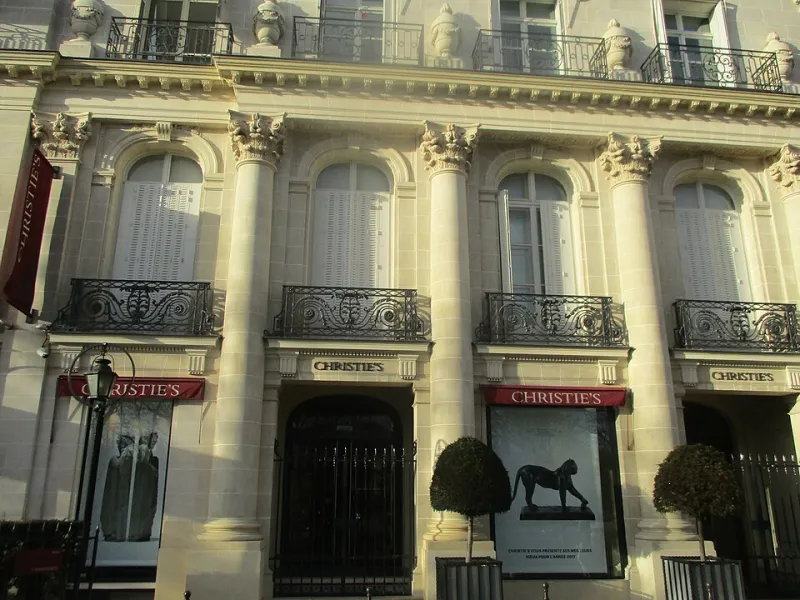
Photo: Thomon, CC BY-SA 4.0, via Wikimedia Commons
There is a specific quiet that settles over a saleroom at about ten past ten on a Saturday morning. The chairs are arranged in slightly-too-straight rows. Somewhere a strip light hums. A man in a gilet is turning a brass lamp over in his hands as though it might say something. Then the auctioneer clears his throat, the first lot limps in at a tenner, and the room wakes up.
I have spent a lot of Saturday mornings in these places and come home with almost nothing. A box of picture frames. A chair I did not need. Once, memorably, nothing at all except a cup of tea and a strong opinion about a chaise longue. It remains one of the better mornings out available in this country, and it costs the price of a hot drink.
The cheapest drama going
Regional auction houses are not the gold-plated London salerooms you see in the papers. They are warehouses on industrial estates, converted chapels, old corn exchanges, buildings that smell of polish, dust and other people's houses. Entry is free. Nobody checks a ticket. Nobody minds if you never bid on anything.
You do need to register if you want a paddle, and that means photo ID and a card, and it takes three minutes at a desk. But an enormous number of people in the room never register at all. They are there for the same reason people go to watch cricket: the plot is slow, the characters are excellent, and occasionally something extraordinary happens.
And it does happen. Box lots go for £4 that contain a Wedgwood jug. A watercolour fetches eight times its estimate because two men at the back dislike each other. A stuffed fox fails to sell entirely and is walked, with dignity, back out of the room.
The etiquette nobody writes down
Salerooms are friendly but they run on unspoken rules, and breaking them marks you out instantly.
Sit behind the auctioneer, not in his eyeline, if you are not bidding. The front row is for dealers and people who have done this for thirty years. Sit in it by accident and you will be mistaken for someone who wants to pay money.
Never scratch your head. A nod, a raised paddle, a finger, a twitch of a catalogue — all count as bids. If you are unsure, sit on your hands. This is not a joke. People have bought pianos this way.
Don't touch anything you have not been invited to touch. At viewing there will be staff with gloves who will happily turn a jug upside down for you. They would rather you asked than that you chipped it with a wedding ring.
Ask for a condition report. If you cannot get to the viewing, ring or email the saleroom. They will tell you about the crack. They are not trying to hide the crack. The crack is in the catalogue description, in smaller type, and you did not read it.
Budget for the buyer's premium. The hammer price is not the price. Add somewhere between twenty and thirty per cent once premium and VAT are in. A £40 box lot is not a £40 box lot, and the moment you work this out you become insufferable at dinner parties.
Do not ask the auctioneer whether something is a good buy. The answer is either 'it is now' or a look that suggests you have misunderstood the entire enterprise.
Viewing day is the actual event
Most salerooms hold viewings the day before the sale and again from nine o'clock on the morning itself. This is where the real pleasure sits. Bring a small torch and a magnet. Turn things over. Check whether the clock has a movement in it. Look at the bottom of the box, not the top, because a box lot is usually one decent thing and eleven dead hoovers.
Viewing is also where you eavesdrop best. Two women discussing a dressing table. A man explaining to nobody in particular that they don't make hinges like that any more. A couple conducting a low-level argument about a sideboard that has been running since roughly 2019.
Four rooms worth the train fare
Tennants, Leyburn. Vast, theatrical and set in the Yorkshire Dales, with a café that understands it is feeding people who have driven forty minutes to watch furniture. The sheer volume of stuff is the attraction; there is always another room.
Boldon Auction Galleries, Tyne and Wear. A proper mixed general saleroom — ceramics, tools, jewellery, the occasional bewildering lot of taxidermy — with a regular crowd who all seem to know each other.
Keys, Aylsham. A Norfolk market town saleroom where the fine art sits comfortably alongside house clearance. The walk to the café is half the point.
Elstob & Elstob, Ripon. Small, sharp and quick, with a good line in ceramics and oddities, and auctioneers who plainly enjoy the theatre of it.
The brew is the point
Here is the truth of it: the tea is not incidental. The café is where the regulars gather, where the retired dealer explains what everything used to be worth, where the woman who comes every week and has never once bid holds court near the hatch. Some salerooms have a proper café with a bacon roll operation. Others have a kettle and a tin. Both work.
It is a warm room with chairs, a bit of sport and a running commentary on the contents of strangers' houses. It is cheaper than the cinema, it lasts longer, and the interval is self-service.
Go on a wet Saturday. Sit at the back. Watch a man pay £18 for a box of doorknobs. Leave when you have had enough. You will be back, and you will not have bought anything, and it will still have been the best morning of your week.