Steam, Goosebumps and the 7am Roll Call: Britain’s Unwritten Lido Rulebook
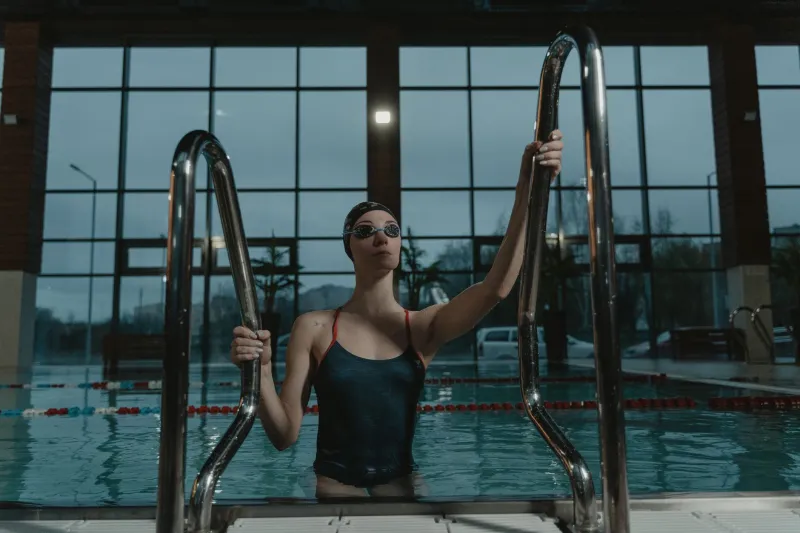
There is a particular smell to a lido at seven in the morning. Chlorine, yes, but also wet concrete, hot tea and the faint metallic tang of a municipal boiler doing its best. You arrive in the dark, clutching a bag that contains a towel, a flask and approximately forty per cent of your will to live. You leave in daylight, pink-faced and oddly triumphant. In between, you swim.
Britain has a long, complicated relationship with outdoor pools. Seaside lidos were once civic statements — concrete and glass and optimism — and plenty were left to moulder when foreign holidays stole the crowds. The revival has been slow, volunteer-led and frequently held together by raffle tickets. But walk into almost any surviving lido before the working day begins and you will find a club that has no membership card, no app and no loyalty scheme. Just a queue, a lane, and a shared understanding that this is a slightly mad thing to do before breakfast.
The queue is the membership form
Nobody tells you this on your first visit. You turn up at ten to seven, assuming you will glide in. Instead you find a line of people in coats, hats and flip-flops, standing in the car park with the patient air of commuters waiting for a train that has never once been on time.
The queue is where the etiquette begins. Have your booking ready — most lidos now run timed sessions, and 2026 being 2026, there is usually an app involved somewhere. Have the right change if there is a honesty box. Do not attempt to skip ahead because you are cold. Everyone is cold. That is the point.
Regulars recognise each other by silhouette. There is the woman with the enormous tow float and the expression of a polar explorer. There is the man who does exactly forty lengths and then sits in his car with the heating on full blast for fifteen minutes. There is the retired couple who bring their own tea bags and a small flask of hot water, because the café does not open until eight and they have opinions about this.
The queue is also where you learn the local weather lore. Someone will announce the water temperature as though reading a stock report. Someone else will say, 'It’s bracing,' which is British for 'it is freezing and we are all pretending to enjoy it.'
Lane manners: a silent parliament
Inside, the lido becomes a small, damp parliament. Lanes are assigned by speed, but speed is a matter of self-assessment, and self-assessment is where democracies falter.
You will find the fast lane occupied by a person doing a medley that appears to involve mostly splashing. You will find the slow lane full of people who are actually quite quick but prefer to stop and chat at the wall. The unspoken rules are simple: keep left, overtake with care, do not grab someone’s ankle to make a point, and never, under any circumstances, stand at the end of the lane having a full conversation while others are trying to turn.
There is a lovely diplomacy to it. A tap on the foot means 'I am here, please let me past.' A raised hand means 'thank you.' A tow float is a flag of independence. A kickboard is a confession that today is not a front crawl day. Nobody speaks much, but everybody is watching, and the whole thing functions on a level of trust that would collapse if anyone brought a whistle.
Kettles, hooks and the volunteer economy
Behind the scenes, the lido runs on people who are not being paid enough, which is to say volunteers. They sweep leaves out of the water at dawn. They check the chlorine. They fix the boiler, or phone someone who can fix the boiler, or stand around the boiler looking worried in a way that is almost as useful.
Many of these pools are listed buildings, which is a polite way of saying they are beautiful and expensive. Saltdean, Tinside, Ilkley, the Bristol Lido — each has its own architectural personality and its own fundraising saga. The volunteer economy is what keeps them going: the quiz nights, the sponsored swims, the second-hand book stalls, the discreet donation box by the kettle.
And the kettle matters. After a cold swim, a hot drink is not a luxury; it is a medical intervention. The ritual of standing around in a damp swimming costume, clutching a chipped mug and refusing to go and get dressed, is one of the great British social pleasures. It is the closest many of us get to a sauna.
The weather is the other swimmer
You cannot separate the lido from the forecast. In summer, it is sunburn and overpriced ice cream. In winter, it is goosebumps and the comedy of a weather warning that says 'risk to life' while a woman in a floral swim cap does backstroke through the steam.
The cold is the shared enemy, and beating it together is the shared joke. There is a moment — usually about ninety seconds in — when your body questions every decision that led you here. Your breath goes shallow. Your fingers stop cooperating. You consider getting out. And then something clicks, the blood moves, and you are swimming, properly swimming, in water that is technically warmer than the air.
People describe this as 'invigorating,' which is one word for it. Others say it 'sets you up for the day,' which is another. The truth is probably simpler: it is a small, controlled hardship that makes the rest of the day feel manageable. It is also, crucially, a laugh. The faces on the poolside are not the faces of athletes. They are the faces of people who have just done something slightly ridiculous and are delighted to have survived it.
Why shivering together counts
Britain is good at many things, but one of its underrated talents is creating institutions that feel like clubs without ever calling themselves clubs. The lido is one of them. There is no joining fee, no committee, no secret handshake. There is just a pool, a timetable, and a group of people who have decided that this is how they want to start the day.
In a country where so much of life has been smoothed into apps and subscriptions, the lido remains stubbornly physical. You have to go there. You have to get wet. You have to stand in a queue with strangers and pretend you are not shivering. That shared physicality is the point. It is belonging without a badge, community without a group chat.
A field guide for first-timers
Book ahead if the lido takes bookings. Arrive early, because the queue is part of the experience. Bring a flask, a towel that is bigger than you think you need, and a hat for afterwards. Wear flip-flops in the changing rooms. Do not apologise for being slow. Do not brag about being fast. And when someone says the water is 'lovely once you’re in,' understand that they are lying in the most generous possible way.
By 7:45, it is over. You are dressed, slightly stunned, and holding a tea that tastes better than any tea has a right to. The car park is emptying. The next session is forming at the gate. The lido has no record of your visit, no points to award, no streak to maintain. It just opens again tomorrow, and the queue will be there. That is the membership card. You turn up, you shiver, you belong.