The Almost-Famous Are Everywhere: A Field Guide to Britain’s Plaque-Hunting Weekends
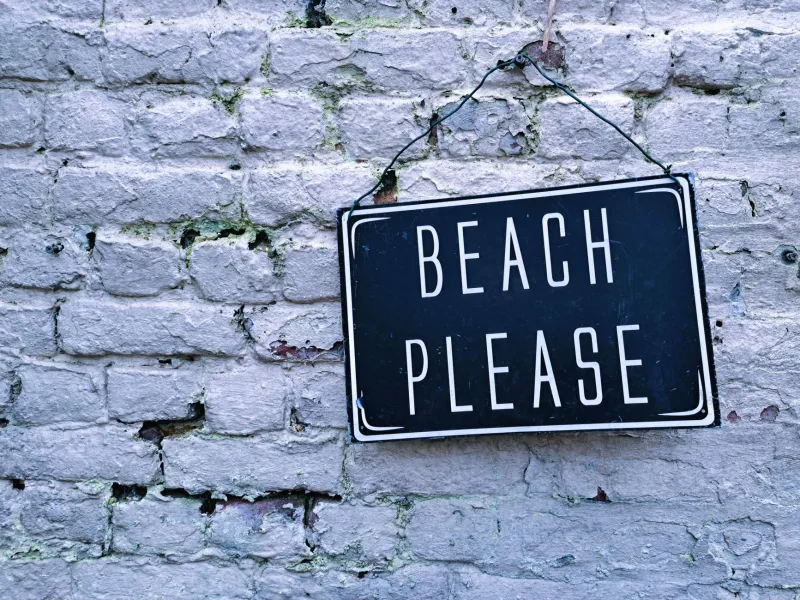
There is a particular kind of British weekend that begins with no plan beyond a coffee and a vague notion of walking somewhere. Then you spot it: a small disc on a brick wall, a name in capitals, two dates, a line of explanation. You stop. You read. You think, briefly, about a person who lived on this street before the street looked like this. And then you notice another one, half a mile away, and the day quietly rearranges itself around the hunt.
Blue plaques are the obvious entry point. The English Heritage scheme in London, which began in 1866, is the grand old man of the form, but it is far from the whole story. Councils, civic societies, heritage trusts, universities, pubs and parish councils all run their own versions. Some are blue. Some are green, brown, black, enamel, stone or homemade. Some commemorate poets. Some commemorate engineers, suffragists, surgeons, musicians, union organisers and people whose main achievement was being stubborn in public at the right moment. The almost-famous are everywhere once you start looking.
Why the hunt gets under your skin
Plaque hunting is not really about collecting. It is about reading a town against the grain. A high street tells you what it sells and what it wants you to buy. A plaque tells you what it remembers, which is a stranger and often more interesting question. The person on the wall may have died broke, been ignored by the establishment, or done something that only became impressive a century later. The plaque does not care. It makes a claim, and you get to argue with it.
That is the pleasure of the thing. It is free, slow and local. You do not need a ticket, a guidebook or a special occasion. You need a pair of shoes and enough curiosity to look up. The best plaque walks are not museum visits with fresh air. They are a series of small interruptions to an ordinary street, each one asking you to recalibrate what counts as history.
What the gaps tell us
Britain memorialises unevenly, and the wall shows it. London’s blue plaques are the most famous, but every city and town has its own logic, its own committees and its own blind spots. For a long time, the people honoured tended to be male, professional, white and successful in ways that left a paper trail. Women, working-class figures, migrant histories, disabled people and LGBTQ+ lives are underrepresented in many older schemes. Some places are correcting this. Others are not.
A plaque is an argument, not a verdict. It says: this person mattered enough to be fixed to a wall. The absence of a plaque is also information. It tells you who fell out of fashion, who had no institution to lobby for them, who was considered embarrassing, difficult or simply not the sort of person a civic committee wanted on a high street. The gaps are not a reason to give up on plaques. They are the reason to read them properly.
The rules of the game, such as they are
There is no official club, no membership card and no dress code. Some plaque hunters photograph every disc they find and log the coordinates. Others keep a mental list and forget half of it. Both are fine. The etiquette is simple: do not trespass, do not block the pavement, do not assume the building is open, and do not treat the plaque as a selfie prop while someone is trying to get past with a pram.
The other rule is to look up one name. Not all of them. One. Plaque hunting becomes genuinely surprising when you follow a thread from the wall to the library catalogue or the local history website. A minor poet turns out to have been a radical printer. A surgeon turns out to have campaigned for clean water. A musician turns out to have taught half the town. The almost-famous are rarely dull once you give them ten minutes.
Build a walk in your own town
Start with the local studies library or council heritage page, then look for the smaller schemes that never make the national news. Civic societies often publish PDF trails. Churchyards, chapels, pubs, schools and old factories carry their own memorial boards. Some towns use enamel signs, carved stones or painted murals instead of blue discs. The colour is not the point. The claim is.
Pick a theme rather than a route: reformers, women in medicine, industry and invention, migration, music, dissent. Choose five or six plaques and leave room for a wildcard. Walk between them at street level, not through a map app that turns the day into a delivery route. Stop for a cup of tea. Read the inscription twice. If a name catches you, make a note and look it up later. The best plaque walks end somewhere you did not plan, usually in front of a building you have passed a hundred times without seeing.
The almost-famous are the point
Fame is a poor guide to interest. The great and good get the statues and the airport signs. The almost-famous get a small disc and a line of text, which is often more revealing. They remind us that history is not only made by prime ministers and generals. It is made by people who improved a drainage system, taught a generation, wrote something strange and kept going, or stood in a square when standing there was unpopular.
So next weekend, ignore the obvious attraction and follow the wall. Go looking for the famous and you will find a queue. Go looking for the almost-famous and you will find Britain, still arguing with itself, one plaque at a time.