Pass the Meeple, Not the Pint: The Case for Britain’s Board Game Cafés
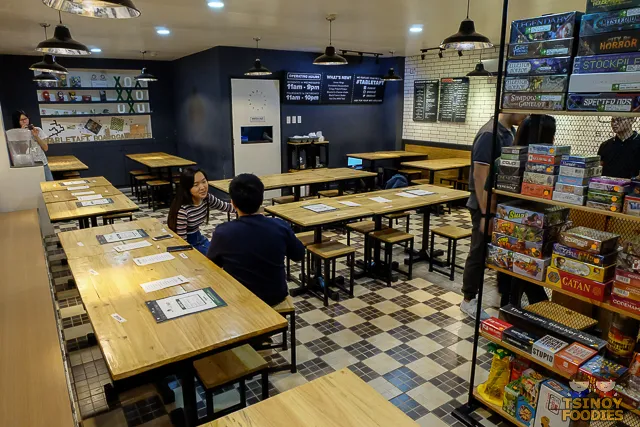
Photo: Crumpylicious Blog, CC BY 2.0, via Wikimedia Commons
Let us start with a confession: the pub is a hard act to follow. It has history, atmosphere, the best seats in Britain and a social contract so well understood that you can walk into one alone and come out with a friend. But it is not the only room in the country. And for a growing number of people, it is not even the easiest one to walk into.
That is where the board game café comes in. Not as a rival to the pub, but as a different kind of third place — a space that is neither home nor work, where the point of being there is simply to be there with other people. In 2026, these places have become one of the quiet success stories of British social life. They are not a craze any more. They are infrastructure.
The problem with the pub as default
For a long time, going out in Britain meant going to the pub. It still does, for plenty of people. But the pub is not always a neutral choice. It can be expensive. It can be loud. It can be a place where the default activity is drinking, and where not drinking makes you feel like you have missed the memo. For anyone who is sober, sober-curious, broke, anxious, new to a city, or simply tired of shouting over a fruit machine, the pub can feel less like an invitation and more like a test.
A board game café lowers the stakes. You pay for a table, maybe a small cover charge and a coffee. You pick a game. You sit down. The game gives you something to do with your hands and something to talk about that is not work, the weather or the state of the country. It is a social lubricant that does not come in a pint glass.
What a game café actually offers
The good ones are not trying to be cool. That is their secret. They are brightly lit in the way a living room is brightly lit. They have shelves of games that look like they have been played with, because they have. They have staff who can read a table and suggest something that will not cause a domestic by the second round. They have snacks. They have rules explanations. They have a slightly chaotic atmosphere that feels less like entertainment and more like hospitality.
And they have time. That is the real luxury. In a board game café, you are not expected to turn the table in ninety minutes. You can stay for an afternoon. You can play something short and silly, or something long and complicated that makes everybody lean forward. You can be bad at it. Nobody minds. The whole point is the shared attempt.
From Leeds to Cardiff, the good ones are not trying too hard
Leeds has a strong claim to being one of the best cities in Britain for this sort of thing. The cluster around the city centre includes places where the games are the main event and the food is a happy supporting act. You get students, families, date nights, work nights out that are not just another meal, and groups of friends who have been meeting on the same weeknight for years.
Cardiff has its own version of the same story. The city’s independent game cafés have become quietly essential for people who want a night out that does not revolve around alcohol or a screen. The atmosphere is different from Leeds — a bit more living-room, a bit less clubhouse — but the principle is the same. You book a table, you take a risk on a game you have never heard of, and you leave having talked to people properly.
This is not just a big-city phenomenon, either. Smaller towns have picked up the idea because it fits the way people actually live now. A board game café can work in a market town with a decent high street and a population that is tired of driving to the nearest cinema. It needs shelves, tables, a kettle and someone who knows the difference between a worker placement game and a party game. That is a low bar, and a surprisingly high one.
The third place we needed
There is a lot of talk about the decline of the third place in Britain — the spaces between home and work where community actually happens. The pub used to do a lot of that work. So did the church hall, the working men’s club and the local library. Some of those are still doing it. But the board game café has stepped into a gap that nobody quite knew was there. It is not nostalgic. It is not trying to recreate the past. It is just a room full of tables where people are encouraged to sit down and stay a while.
That is why the best of them matter more than ever in 2026. They are affordable-ish, sober-friendly, all-weather and genuinely social. They give you a reason to make plans that do not involve a booking fee or a dress code. They make it acceptable to be a beginner in public. And they prove that the best night out in Britain might not be the loudest one. It might just be the one where somebody passes you a meeple and says, your turn.