The Hot Plate at the End of Platform 3 Is Britain’s Last Great Leveller
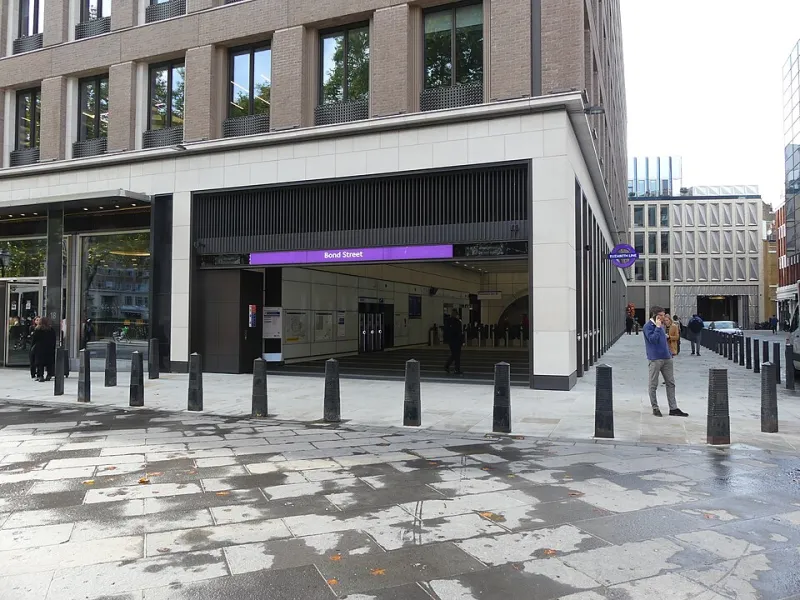
Photo: Sunil060902, CC BY-SA 4.0, via Wikimedia Commons
It is 6.52am and the light outside is the colour of dishwater. Inside, a woman in a tabard is scraping a hot plate that has, by the look of it, been in continuous service since the Heath government. Two lads in hi-vis are arguing about a football transfer. A man in a very good suit is eating beans on toast with the concentration of someone defusing something. Nobody is taking a photograph of any of it.
This is a railway station café. There are hundreds of them. They are, pound for pound, the most honest rooms in the country.
The one place that doesn’t care who you are
Walk into a destination restaurant and you are, whether you like it or not, being assessed. Your booking, your coat, your pronunciation of the specials. The station café asks nothing. It has one question — tea or coffee — and it will accept any answer, including a slightly apologetic “just a tap water, love.”
At the big London termini the crowd is genuinely planetary: a night-shift nurse finishing, a barrister waiting on a delayed 07:14, three teenagers splitting a portion of chips at nine in the morning with the swagger of people who have made a decision. Move out along the lines — the suburban halts, the commuter belt stops with their single counter and a fridge of sandwiches — and the cast changes but the etiquette doesn’t. Somebody holds the door with a foot because their hands are full. Somebody says “mind your back” and means it.
Nowhere else in 2026 do you get that mix at that price. Not the pub, not the leisure centre, not the aggressively curated co-working space that replaced the bank.
The Victorians understood something about this. The great refreshment rooms of the nineteenth century were built on the assumption that a traveller is a person who needs feeding, not a customer who needs upselling — an assumption most of our transport architecture has since abandoned. The best survivors of that instinct aren’t grand at all. They’re a counter, a griddle and a laminated menu with a photograph of a full English that has not been accurate since 2011.
Formica is a historical document
Look at the surfaces. The lino, worn pale in a track where the queue goes. The shelf of sauce bottles, two of which are always empty. The handwritten sign about the card machine (“£5 minimum, sorry — the signal is rubbish”). The tin of Quality Street that appears every December and is emptied exclusively of the purple ones by mid-morning.
None of this is styled. That’s the point. A Wetherspoon’s carpet is designed to be talked about; a station café’s carpet is designed to be walked on by people who have missed a train and are not in the mood.
A sausage roll is a small contract
Here is a theory I’ll defend to the end. The quality of a station café is not measured by the sausage roll alone but by the speed with which it is handed over. There is a moral compact at work: you are transient, the staff know it, and they will not slow you down out of politeness. The tea arrives in a mug you could defend a doorway with. The bacon is already on. Your change is counted before you have finished asking.
That efficiency is a form of respect. Try finding it in a place with a small plate and a foraged garnish.
The staff, incidentally, are the country’s most underrated information service. They know which platform floods, which train is always late and which one is secretly the fast one. In a rural hut in the Peak District a few months back, the woman behind the counter looked at my ticket, looked at me, and said, “You’ll want the one after. This one’s the slow one, and the trolley’s off.” She was right on both counts. Nobody has ever improved on that level of service with an app.
The hut at the end of the line
The rural platform café is a different species entirely. Often it’s a converted waiting room, or a shed with a kettle and a WhatsApp group. Opening hours are theoretical. There may be a honesty box. There will be a noticeboard advertising a village fete that happened in August and is still up in November, and a dog bowl by the door that is nobody’s responsibility and everybody’s.
These places persist because someone decided the alternative was worse. Not a business plan — a decision. A retired teacher, a former guard, a couple who took the lease because the last people left. Their economics are baffling and their value is immeasurable. On a wet Tuesday in February, a hot drink and a dry bench is not a hospitality offer. It’s infrastructure.
What the £3.40 cup of tea actually buys
It buys ten minutes out of the weather. It buys somewhere to sit when your train is cancelled and the announcement has just said “we advise you not to travel” in a tone of profound apology to nobody in particular. It buys the small dignity of not hovering awkwardly under a departure board.
And for the rest of us, it buys a glimpse of the country as it actually is on a normal morning: shift workers and schoolkids and someone’s nan going to see someone’s cousin, all at the same tables, all under the same strip lighting, all absolutely unbothered by each other.
We are forever being told that Britain’s high streets are in trouble and that we’ve stopped having places to be together. We haven’t. We’ve just stopped noticing the ones that never tried to sell us an experience. The station café is still there at half six, still scraping the hot plate, still not asking what you do for a living.
Go on. Get the sausage roll. It’s a long way to the next one, and the trolley’s off.