The Book Box at the Crossroads: Britain’s Tiniest Libraries Run on Trust and WD-40
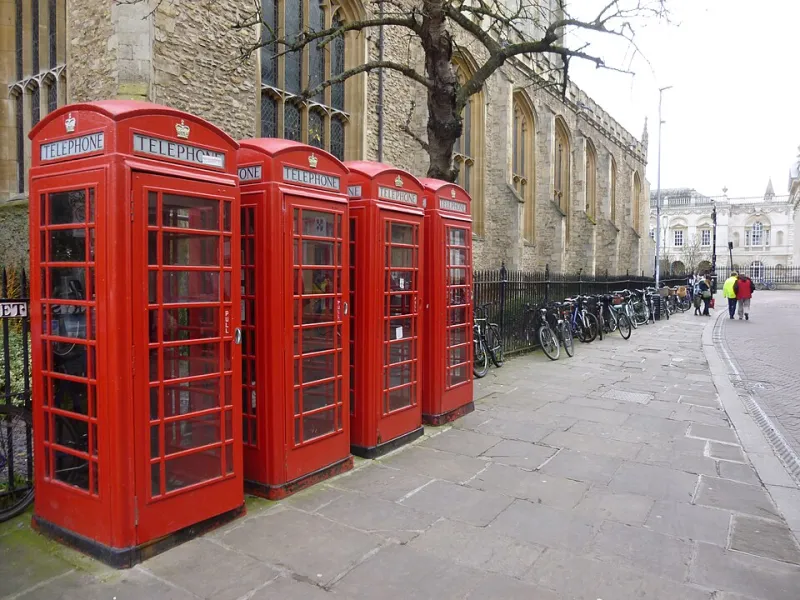
Photo: Richard Humphrey , CC BY-SA 2.0, via Wikimedia Commons
There is a particular kind of British optimism in taking a dead phone box, wiping the condensation off the glass, and filling it with paperbacks. It assumes three things at once: that someone will walk past, that they will open the door, and that they will bring the book back. Not always. But often enough to keep the whole strange system alive.
You have probably seen one. A red kiosk at the edge of a village green, or beside a bus shelter, or on a corner where the road bends and the pavement gives up. The phone has gone. The shelf has arrived. The sign says something like Books: take one, leave one, in handwriting that suggests a parish council meeting went on longer than expected.
These are not formal libraries. They have no catalogue, no barcode, no shushing. They are closer to a village noticeboard with a spine — part salvage project, part trust exercise, part gloriously small public institution.
A Kiosk With a Second Act
The phone box was never designed to be useful in this way. It was designed to be weatherproof, legible from a distance, and just about large enough for one person to stand in while pretending not to listen to someone else’s conversation. That it now holds crime novels, gardening manuals and the occasional abandoned diet book is a happy accident of British pragmatism.
Many of these boxes were adopted by communities after being decommissioned, often for the nominal sum of £1 under BT’s kiosk adoption scheme. Parish councils, village trusts and loose bands of volunteers took them on because the alternative was losing a familiar red shape from the landscape. Turning them into book exchanges came later, and it came naturally. A phone box is, after all, a small room with a door. Give a British person a small room with a door and they will eventually put a shelf in it.
What is striking is how quickly the boxes stop looking like telephones and start looking like places. A coat hook. A laminated notice about the fete. A tin for donations. A copy of a Lee Child novel with a cracked spine and a message inside: Good for a train journey, not for the beach.
The Etiquette Is the Catalogue
No one trains the volunteers who look after these boxes. No one issues a manual. Yet a code has emerged, and it is remarkably consistent across the country.
Take a book. Leave a book. Try not to leave a book that nobody would ever want to read. Keep the door shut. Do not treat it as a charity shop for the contents of your loft. If it is raining, be quick. If you see a child’s book, leave it at the bottom where small hands can reach it. If you find something genuinely good — a Persephone classic, a battered Faber poetry collection, a cookbook with handwritten notes in the margin — enjoy it, but perhaps think twice before keeping it forever.
The system works because it is not policed too hard. A strict librarian would collapse at the sight of it. A laissez-faire economist would find it baffling. But the phone-box library operates on a kind of low-level civic trust that Britain does not always advertise about itself. People return books because they said they would. People add books because they want the next person to have something decent to read. The box survives on small, unglamorous acts of follow-through.
What the Glass Door Actually Does
There is a practical side to all this. Phone boxes steam up. They leak. Their hinges stiffen. Their paint fades. Anyone who has helped run one knows the ritual: wipe the glass, clear the leaves, check for damp, rotate the stock, remove the book that has been there since 2019 and is now soft enough to fold. WD-40 is not a metaphor. It is part of the civic infrastructure.
Then there is the stock. A phone-box library reveals a village in a way that a council website never could. The shelves lean towards thrillers, saga, local history, gardening and cookery. There are always several copies of the same book, as if the whole parish read it simultaneously and then had a clear-out. There are guidebooks to places nobody is going to visit this year. There are children’s annuals from a decade ago. There is usually one very good book that someone has left with obvious reluctance.
And because the box is glass, it is always on display. You can see whether it has been refreshed. You can see whether the door is shut. You can see whether anyone has bothered. That visibility is part of the charm. It makes the little library feel like a shared responsibility rather than a service delivered from above.
Why Not Just Use an App?
Apps are better at almost everything. They can tell you what is available, where it is, and whether someone else wants it. They can send reminders. They can organise a waiting list. They cannot, however, give you a reason to walk to the end of the lane on a grey Tuesday afternoon.
The phone-box library is not really competing with the public library system. It is not competing with charity shops either, though it shares their smell of old paper and good intentions. It is doing something smaller and odder. It is turning a piece of dead infrastructure into a place where a stranger might leave you a book and trust you to bring it back.
That is not efficient. It is not scalable. It is not going to disrupt anything. It is just there, at the crossroads, doing a quiet job.
A Small Detour Worth Taking
If you are the sort of person who plans a walk around a good pub lunch, add a phone-box library to the route. Look for the red shape near the green, or the one that has been painted a defiant shade of green, or the one with a notice taped inside saying Please do not leave magazines. Open the door. Have a look. Take something if it appeals. Leave something if you can.
It is the smallest public institution you will visit all week, and possibly the most honest. No membership card. No opening hours. No app to download. Just a glass box, a shelf, and the belief that most people will do the decent thing. In 2026, that is a rare and rather lovely thing to find.