The Sign at the Roundabout Knows More About Britain Than You Do
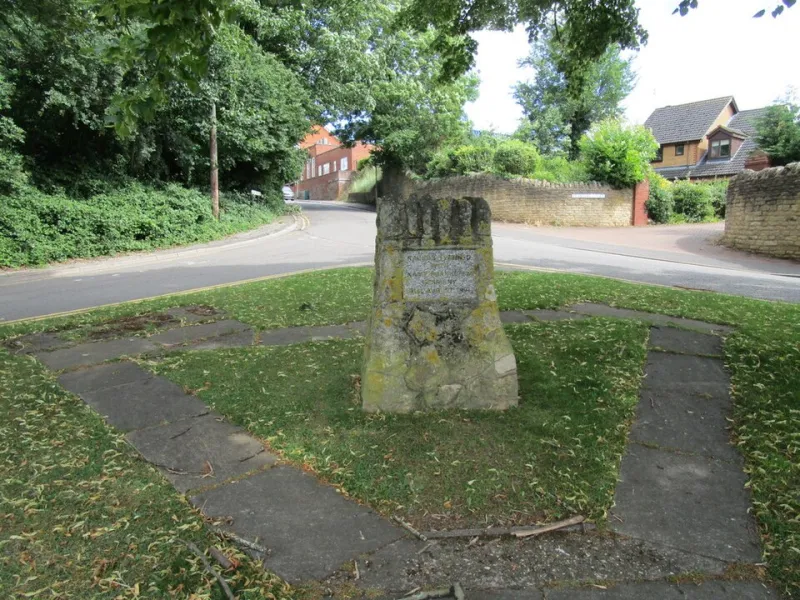
Photo: Jonathan Thacker , CC BY-SA 2.0, via Wikimedia Commons
There is a particular kind of British road sign that tells you nothing you need. It sits just past the last roundabout, beneath the brown sign for a garden centre and above the one warning of a 7.5-tonne limit, and it reads something like: TWINNED WITH SAINTE-MÈRE-ÉGLISE. No distance, no direction, no services. Just a fact. Somewhere, at some point, a committee decided this was information worth casting in metal.
We are trained to ignore these signs. They are the wallpaper of the British roadside — faded, slightly wonky, often half-swallowed by a hedge. But look properly and you'll find one of the more peculiar and quietly admirable things this country does: a sprawling, underfunded, volunteer-run network of municipal friendships that has outlasted most of the things it was built alongside.
A foreign policy conducted by retired teachers
Town twinning is what happens when civic ambition meets a laminator. The formal version involves a charter, a mayoral chain, a delegation, and at least one speech that goes on too long. The informal version involves a coach trip, a spare bed, and a great deal of cheese.
Most British twinning links were forged in the decades after the Second World War, when the idea of pairing towns across borders felt less like a jolly and more like a repair job. Coventry's ties to Dresden and Volgograd are the solemn end of the spectrum — relationships built deliberately out of what had been destroyed. But the same impulse produced thousands of smaller, odder pairings: Yorkshire mill towns with French market towns, Welsh villages with Breton ones, a Scottish seaside town with somewhere in Denmark that nobody in either place can now quite explain.
What's striking is how unglamorous the machinery is. There is no ministry for this. Twinning is administered by associations of ordinary residents — secretaries with ring binders, treasurers with a box of receipts, chairmen who have been chairing since the 1990s. They organise the exchange visits, host the receptions, and maintain the sign that the council technically owns but nobody technically maintains.
The strange chemistry of a good pairing
The best twinnings are not logical. Logic would pair similar-sized towns with similar economies, and sometimes that happens. But the memorable ones have a whiff of the arranged marriage about them — two places that have nothing in common except a decision, made once, to keep writing.
Occasionally the joke is the point. In 2013, the Perthshire village of Dull twinned with Boring in Oregon, a pairing so obviously destined for a headline that it briefly made both places famous. What could have been a one-off stunt turned into something more durable: an annual exchange of letters, a bit of shared branding, a genuine low-level fondness. It is the twinning as a wink — and arguably the most successful piece of place-marketing either village has ever had.
More recently, the map has been redrawn by events. Since the full-scale invasion of Ukraine, a number of British towns have struck new links with Ukrainian counterparts, often with a practical edge — fundraising, supplies, hosting — that harks back to twinning's postwar origins. The plaque has become useful again.
What the volunteers actually get out of it
Ask anyone who runs a twinning association why they bother and you'll rarely hear high-flown stuff about international understanding. You'll hear about the people. The family in the Loire who still send a card every Christmas. The German group who arrived with a coach full of beer and left with a coach full of beer and a standing invitation to a wedding. The fact that a teenager from a small town got to spend a week somewhere foreign because a retired headmistress spent eleven months filling in forms.
It is diplomacy at the scale of a church hall: modest, personal, occasionally chaotic, and almost entirely dependent on goodwill. When a link dies — and plenty have — it usually dies quietly, with a final AGM and a sign left to the weather. Nobody issues a statement. The roundabout keeps announcing a friendship that no longer answers its emails.
How to read a twinning sign
Next time you pass one, treat it as a small historical document. It tells you roughly when the town was feeling outward-looking, which countries it considered worth impressing, and whether anyone has been up a ladder with a cloth recently. A pristine plaque suggests an active committee. A green-black one, half-hidden by laurel, suggests a story that has quietly ended.
And if the name on it is somewhere you've never heard of — a commune of four hundred people, a suburb of a city you couldn't place on a map — that's the best kind. It means two sets of strangers once decided, against all reasonable odds, to pay attention to each other.
Britain is not always good at saying what it is. The flags and the rhetoric tend to oversell it. But there is something honest about a small metal rectangle on the edge of town that says, plainly: we are connected to this other place, and we thought you should know. It's the least dramatic foreign policy in the world. It's also the one that has kept turning up.